





.svg)
.svg)

.svg)
.svg)
Myomectomie
Your Myomectomy in Tunisia at a low price. A precise solution to turn the page on fibroids and return to a peaceful life.
Opt for a medical stay with Tunisie Destination santé and benefit from the expertise of our specialist doctors and the best health establishments in Tunisia. Thanks to our tailor-made service, you will benefit from complete support in a secure and comfortable environment.


How does it work?


Myomectomy, what is it?
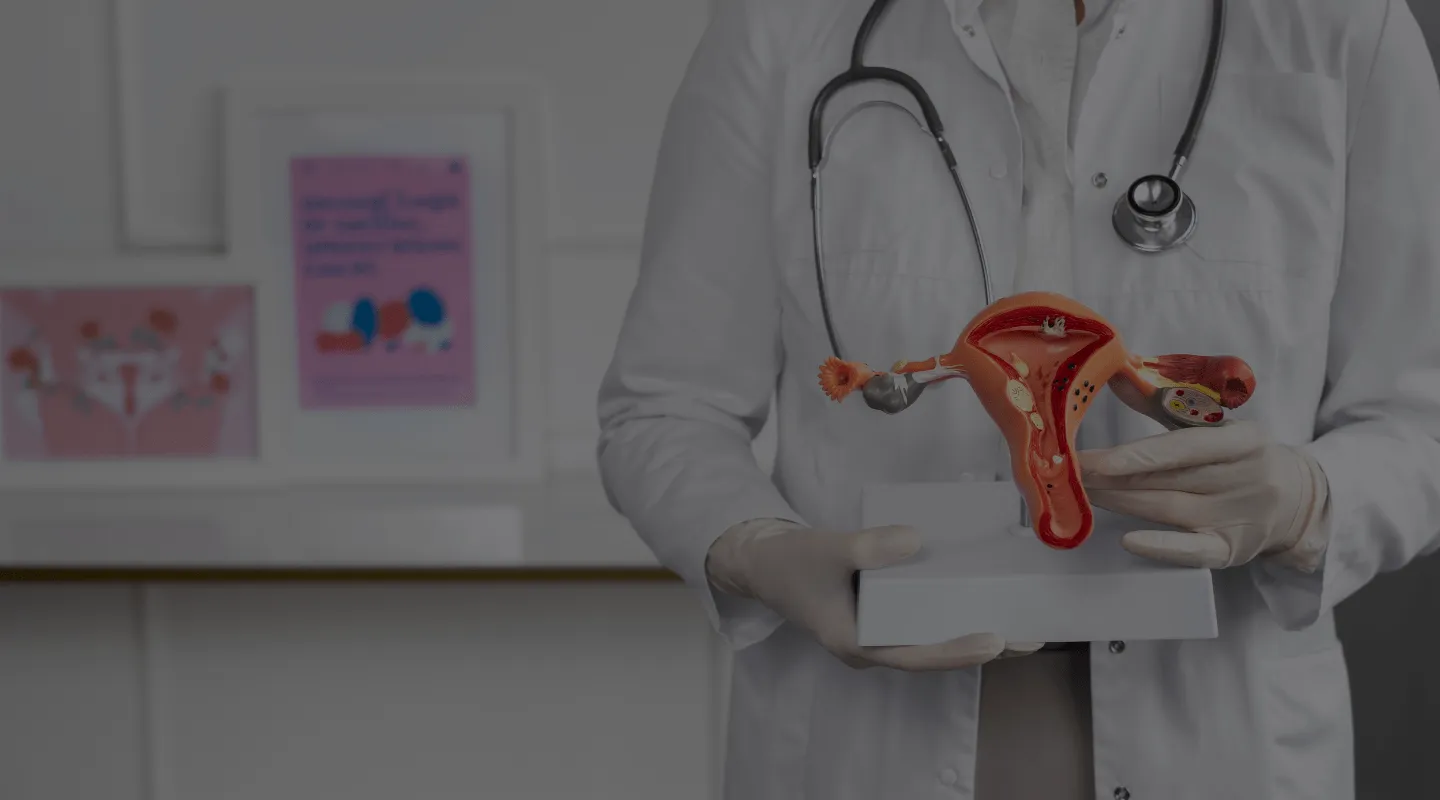
Myomectomy is an operation to remove uterine fibroids, also called myomas. These common, non-cancerous growths appear in the uterus. The development of uterine fibroids usually occurs between the ages of 30 and 45, but can also occur at any age. This type of intervention involves removing fibroids present in the myometrium and uterine tissue. Unlike hysterectomy, which requires removal of the entire uterus, myomectomy only requires removal of fibroids. Women who have had this operation report an improvement in their symptoms related to fibroids. These symptoms are usually a decrease in heavy menstrual bleeding and pelvic pressure.
Why myomectomy?
If you suffer from fibroids that disrupt your daily life, your gynecologist may suggest a myomectomy. This intervention could provide you with considerable relief. We mainly mention bleeding and heavy periods. When surgery is necessary, it is preferable to opt for a myomectomy rather than a hysterectomy in cases of uterine fibroids, if you want to become pregnant, if you are having fertility difficulties or if you simply want to keep your uterus.
Myomectomy price in Tunisia cheap
Myomectomy is offered from 1,500 euros. To receive a personalized quote with a cheap myomectomy price, please contact us. Tunisie Destination Santé can organize the clinic airport transfer for you and plan your stay to remove uterine fibroids.
Your health, our priority.
Request your free quote.
What are the selection criteria to determine if a patient is a good candidate for myomectomy?
To help women suffering from uterine fibroids, myomectomy is an effective and frequently used surgical solution. However, it is important to consider several criteria to determine if the patient is a suitable candidate. First, it is essential to consider the type of uterine fibroids present in the patient. They can be classified into different types such as subserosal, intramural or submucosal fibroids. Submucosal fibroids, which grow under the lining of the uterus, can be effectively treated with a myomectomy. However, it may be more difficult to remove them using this procedure when dealing with intramural or subserosal fibroids.
When to perform a myomectomy?
The decision whether or not to perform a myomectomy depends on several factors, such as the location, size and number of fibroids present in the patient. Indeed, if the fibroids are located near the fallopian tubes or the ovary, the procedure could be more complicated and carry an increased risk of complications. Additionally, if the fibroids are large or multiple, more complex surgery may be necessary. The general well-being of the patient is also an element taken into account. It is important to note that certain health problems can increase the risk of complications during surgery. Additionally, women who have previously had an abdominal procedure may have significant scarring, which may also increase the risk of complications during a myomectomy.
Myomectomy and pregnancy
To make a good decision regarding the patient’s health and fertility, it is essential to consider her pregnancy plans. If she plans to have children in the future, myomectomy is a better option compared to hysterectomy. The latter, in fact, completely removes the uterus. However, it is important to note that myomectomy carries increased risks of complications during pregnancy, such as premature delivery. Thus, a patient’s choice for the myomectomy procedure depends on various elements such as the type, size and location of the uterine fibroids, as well as the patient’s overall health and pregnancy desires. It is essential for healthcare professionals to carefully evaluate each patient before recommending myomectomy. A thorough discussion of the risks and benefits of this procedure is advised.
What are the different myomectomy methods available?
Myomectomy by Hysteroscopy
To treat uterine fibroids, a surgical procedure called myomectomy is often recommended. These benign tumors can cause health problems in some women. Myomectomy can be performed in different ways, including via laparoscopy or hysteroscopy. The latter involves the use of a camera to remove fibroids through the cervix. The doctor thus does not need to make external incisions. This technique is preferred because it is less invasive and provides faster recovery with less scarring. It is essential to emphasize that healing after a myomectomy can vary depending on several elements, such as the quantity and size of the fibroids removed, as well as the surgical method chosen.
Myomectomy is a common operation for women suffering from uterine fibroids and can be beneficial for those wishing to conceive or preserve their fertility. However, like any surgical procedure, it carries risks and potential complications, including bleeding, infection, and damage to nearby organs. In short, hysteroscopic myomectomy is a less invasive option for removing uterine fibroids, allowing for faster recovery and less worry about scarring. However, recovery after myomectomy can vary depending on different factors, so it is crucial to discuss this with your surgeon to understand the potential benefits and risks of this procedure.
Myomectomy by laparotomy
To remedy uterine fibroids, there is a surgical procedure called myomectomy. These benign tumors form in the uterus of some women. The operation can be performed in several ways, such as laparoscopy or laparotomy. During a laparotomy myomectomy, an incision is made in the abdomen to remove fibroids from the uterus. Although this method is more invasive than laparoscopy, it may be necessary in cases where the fibroids are large or located in hard-to-reach areas. While opting for laparotomy myomectomy, you should keep in mind that the healing process is longer than other methods and the recovery period is more extensive. However, this technique can offer a high success rate in terms of fibroid removal and fertility preservation.
Like any surgical procedure, laparotomy myomectomy carries risks and possible complications such as bleeding, infection and damage to surrounding organs. It is therefore essential to take the time to discuss the potential benefits and risks of this procedure with your surgeon before making a decision. In summary, laparotomy myomectomy is a more invasive option for removing uterine fibroids, but may be necessary in some cases. Although recovery from such an operation may take longer than other methods, it offers a high success rate in terms of eliminating fibroids and preserving fertility. As with any surgical procedure, it is crucial to discuss the potential benefits and risks with your surgeon before making a decision.
Laparoscopic myomectomy
Myomectomy involves removing uterine fibroids during surgery. The gynecologist can operate in various ways, notably through laparoscopy. Compared to laparotomy, the use of laparoscopy for myomectomy is less invasive because it involves small incisions in the abdomen to access the uterus and remove the fibroids.
Due to the reduced size of the incisions, healing is generally faster with laparoscopy than with laparotomy. Additionally, the recovery time is also shorter. This method also has a lower risk of complications, such as bleeding and post-operative infections. However, it is important to emphasize that the possibility of performing a laparoscopic myomectomy may vary depending on the types of uterine fibroids. Things like the size, location, and number of fibroids can influencedetermine the viability of this technique. Additionally, some women may not be ideal candidates for laparoscopy due to pre-existing health conditions or other factors.
Ultimately, the choice of myomectomy method will be determined based on each patient’s specific situation. To choose the most suitable method for each case, it is crucial to work closely with an experienced surgeon to evaluate the specific benefits and risks of each method. In summary, laparoscopic myomectomy appears to be a less invasive alternative to the removal of uterine fibroids, offering faster healing and a lower risk of complications compared to laparotomy. However, it is important to note that this method may not be suitable for all types of fibroids and the choice of method should be made in conjunction with a competent surgeon.
Vaginal myomectomy
Myomectomy is a commonly used surgical procedure to remove uterine fibroids. There are several techniques to perform this operation, one of which is done vaginally. This method involves inserting an instrument called a hysteroscope through the vaginal canal to access the uterus and remove the fibroids. Healing after vaginal myomectomy is generally faster than with other surgical procedures because the cut is limited to the vaginal canal.
It should be noted that this surgical method has a lower risk of post-operative complications compared to other techniques such as laparotomy. However, it is important to note that vaginal myomectomy may not be suitable for all types of uterine fibroids. Indeed, fibroids that are large or located in certain parts of the uterus may be difficult to remove using this method. Additionally, this procedure may not be recommended for women with a history of cesarean sections or other abdominal surgeries.
As with any surgical operation, there are risks associated with vaginal myomectomy. These potential risks include heavy bleeding, infections, damage to surrounding organs, and problems with healing. Patients are strongly advised to speak with their surgeon about the risks and benefits of this specific surgical method, in order to fully understand the implications of the procedure. In summary, vaginal myomectomy can be considered as a surgical solution to remove fibroids from the uterus. Indeed, it offers faster healing and a lower risk of post-operative complications compared to other methods.
What are the risks and benefits of a myomectomy versus a hysterectomy?
The challenges of myomectomy
It is important to consider the potential suffering caused by uterine fibroids in women. These sufferings can be, for example, intense pain or heavy bleeding. When medications are not enough to alleviate these symptoms, surgery may be considered. Two commonly used options for treating uterine fibroids are myomectomy and hysterectomy. The first is to remove the fibroids while preserving the uterus, an option recommended for women who want to preserve their fertility or avoid a hysterectomy. Hysterectomy surgery is a procedure that involves the complete removal of the uterus. It is generally recommended for women who no longer want children or who have uterine fibroids too large to be removed by other methods.
Myomectomy or hysterectomy, which to choose?
By choosing myomectomy, a woman can preserve her uterus and her ability to conceive. It can also relieve the symptoms of fibroids without impacting normal ovarian function. However, hysterectomy offers the advantage of eliminating any risk of fibroids reappearing, because the uterus is completely removed. However, both interventions carry risks. Performing a myomectomy can potentially cause problems such as:
- excessive blood loss,
- damage to neighboring organs,
- healing difficulties.
- chronic pain,
- infections,
- alterations of surrounding organs,
- hormonal imbalances.
- hot flashes,
- night sweats,
- a decrease in libido,
- vaginal dryness.
When considering surgery to treat your uterine fibroids, it is important to carefully review the risks and benefits of each option with your surgeon. Although myomectomy and hysterectomy are commonly used surgical procedures, they each have benefits and risks to consider. On the one hand, myomectomy preserves the uterus and the possibility of conceiving a child, while hysterectomy eliminates any risk of reappearance of fibroids. However, it is essential to discuss these options in detail with your surgeon before making a decision that will best meet your personal needs and concerns.
Risks
The myomectomy procedure carries potential risks such as:
- severe bleeding,
- damage to surrounding organs,
- an infection, a reaction to anesthesia,
- healing complications,
- the possibility of additional surgery in the event of a reappearance of uterine fibroids.
The hysterectomy operation can have serious consequences such as:
- chronic pain, infections,
- damage to nearby organs such as the bladder or rectum,
- hormonal imbalances,
- a decrease in libido,
- early menopause,
- weight gain.
Advantages
By opting for a myomectomy rather than a hysterectomy, you benefit from many advantages. First of all, this intervention allows you to preserve your uterus and thus preserve your ability to conceive a child in the future. It is therefore a more suitable option for women wishing to start a family. Additionally, myomectomy can reduce or completely eliminate symptoms associated with uterine fibroids, such as abdominal pain, heavy periods, and pain during sex, without disrupting your body’s hormonal balance. It is therefore a less invasive treatment alternative than hysterectomy. Finally, choosing vaginal or laparoscopic myomectomy may result in a shorter and less painful convalescence period than laparotomy hysterectomy.
To summarize, this procedure has benefits for women who want to keep their uterus and their ability to procreate, while benefiting from relief from symptoms related to uterine fibroids. Néanless, it is important to discuss it with a surgeon to determine the best option based on each patient’s personal situation.

Do you need a specialist's opinion?
What is the treatment for anemia before performing myomectomy?
The presence of fibroids in the uterus often causes anemia because of the bleeding. To reduce the dangers associated with the myomectomy procedure, the gynecologist might suggest taking iron and vitamin supplements. If you have an iron deficiency due to heavy periods, the gynecologist may prescribe this treatment to increase your hemoglobin level. Another method to treat anemia is to take hormonal therapy before myomectomy. Your doctor may recommend a gonadotropin-releasing hormone agonist, birth control pills, or other hormonal medications to reduce your menstrual flow. These treatments will inhibit the production of estrogen and progesterone. This stops menstruation and allows you to replenish your hemoglobin and iron reserves.
What are the explorations and examinations to be carried out before proceeding with a myomectomy?
Before performing the myomectomy, the doctor will perform a pelvic ultrasound to confirm the size and number of fibroids present. A blood test will also be carried out before the procedure to check whether the anemia has been well treated or not. If this is the case, the operation can be planned. However, if the anemia persists, the gynecologist and the anesthesiologist will have to determine whether it is preferable to maintain the myomectomy or to postpone it in order to treat the anemia beforehand.
How is the recovery process after myomectomy?
Before and during the operation
The convalescence period after a myomectomy is essential to ensure complete recovery of the patient. Before going to the operating room, the patient is given pre-medication to reduce her stress and anxiety. Once you arrive at the OR, a checklist will be scrupulously followed. This is done to ensure that all steps have been followed and that everything is in place for the intervention. An infusion will also be set up before the start of the operation, allowing the administration of fluids and medications directly intravenously. Myomectomy can be performed in several ways such as abdominally, laparoscopically or vaginally. The duration of the intervention will depend on the characteristics of the fibroids such as their size, number and location.
After myomectomy
After the operation, the nursing staff monitors the patient in an intensive care unit or recovery room. Once she wakes up, the nursing staff transfers her to a hospital room. The length of hospitalization varies depending on the surgical method used and the speed of recovery of the patient. On average, a hospitalization of two to three days is necessary. Before discharge from the hospital, the patient will receive counseling to ensure recovery in her own home. These indications may include:
- the prescription of medication to soothe the pain and prevent any infection,
- recommendations regarding diet and hydration,
- activity restrictions,
- guidelines for returning to normal activities.
Recovery after surgery: what to remember?
It is crucial to mention that the recovery process after a myomectomy can last several weeks or even months. The patient will experience minor to moderate pain and a feeling of fatigue during the first days following the procedure. She must also refrain from intense physical activities and sexual intercourse until her doctor has given her permission to do so.
In conclusion, recovery after myomectomy is an important process that requires careful attention. Before intervening, a checklist will be carried out to ensure the patient’s safety. After the operation, the patient will be closely monitored until she fully wakes up, then transferred to a hospital room. The length of his hospital stay will depend on the surgical technique used and his rapid recovery. Once she is ready to go home, the patient will receive instructions for recovery at home.
Our advantages

 Quality care
 Optimized costs
 Reduced waiting times

 Assistance
 Personalized stay
 Tailor-made service
What are the tips for a successful recovery?
After undergoing a myomectomy, it is essential to allow a convalescence period to allow the body to fully heal and recover. The duration of this period varies depending on:
- the surgical method used,
- the size and location of the fibroids,
- the patient’s general state of health.
- limit intense physical efforts
- do not lift heavy objects for a while
- follow a balanced diet to reduce inflammation and promote the healing process.
To maintain good hydration and promote effective healing after a myomectomy, you must increase your water consumption and adopt a nutrient-rich diet, particularly favoring vegetables, fruits, lean proteins and whole grains. At the same time, it is crucial to take care of the scar. In fact, it must be kept clean and dry, changing the dressings regularly. You should also avoid moistening it before receiving the green light from your doctor.
What are the results obtained after a myomectomy?
Myomectomy results may include:
Relief of symptoms.
Once myomectomy is performed, the majority of women experience relief from signs and symptoms.
Improved fertility conditions.
Women who have undergone laparoscopic myomectomy, with or without robotic assistance, experience significant improvement in their pregnancy outcomes over the following year. The doctor recommends waiting three to six months after the operation before trying to conceive, to allow the uterus to heal.
Fibroids not detected
Fibroids that your doctor does not detect during surgery or do not completely remove may eventually grow and cause symptoms. New fibroids, which may or may not require treatment, may also develop. It is important to note that women with a single fibroid have a lower risk of developing other fibroids than those with more than one. Additionally, women who become pregnant after surgery have a lower risk of developing new fibroids.
Contact and quote request for a myomectomy
Uterine fibroids cause discomfort for women. If you want to organize a myomectomy, Tunisie Destination Santé can accompany you during your medical stay as soon as you arrive at the airport. Do not hesitate to contact contact for your myomectomy.
—
Frequently asked questions

Myomectomy is an excellent option for women wanting a future pregnancy, particularly because it preserves the uterus. Unlike hysterectomy, which removes the entire uterus, myomectomy focuses only on removing fibroids.
There is a risk of recurrence of fibroids after myomectomy. Studies show that 15 to 30% of women may develop new fibroids within ten years after surgery.
Yes, the doctor can perform myomectomy laparoscopically, a less invasive technique that uses small incisions. This can result in faster recovery and less post-operative pain compared to traditional open surgery.
Recovery time varies depending on the surgical method. Indeed, for an open myomectomy, recovery may take 4 to 6 weeks, while a laparoscopic myomectomy may require only 2 to 4 weeks.
Yes, it is possible to treat multiple fibroids during a single myomectomy. The surgeon will remove as many fibroids as possible while preserving healthy uterine tissue.
Myomectomy may improve the chances of conception in women suffering from infertility due to fibroids. However, each case is unique, and some women may experience complications related to scarring that could affect fertility.
Preparation may include medical tests, stopping certain medications, and specific instructions from your doctor regarding diet and hydration before surgery. Careful preparation is essential to minimize risk and improve recovery.
Signs of complications may include severe pain, fever, excessive bleeding, or signs of infection. It is crucial to contact a healthcare professional immediately if these symptoms appear.
Myomectomy has a high success rate, with approximately 80 to 90 percent of women reporting significant improvement in symptoms, such as pelvic pain and heavy menstrual bleeding.
Alternatives include hormonal medications, uterine artery embolization (UAE), MRI-guided focused ultrasound treatment, and hysterectomy. Each option has its advantages and disadvantages. This is why the choice is up to the doctor.

