





.svg)
.svg)

.svg)
.svg)
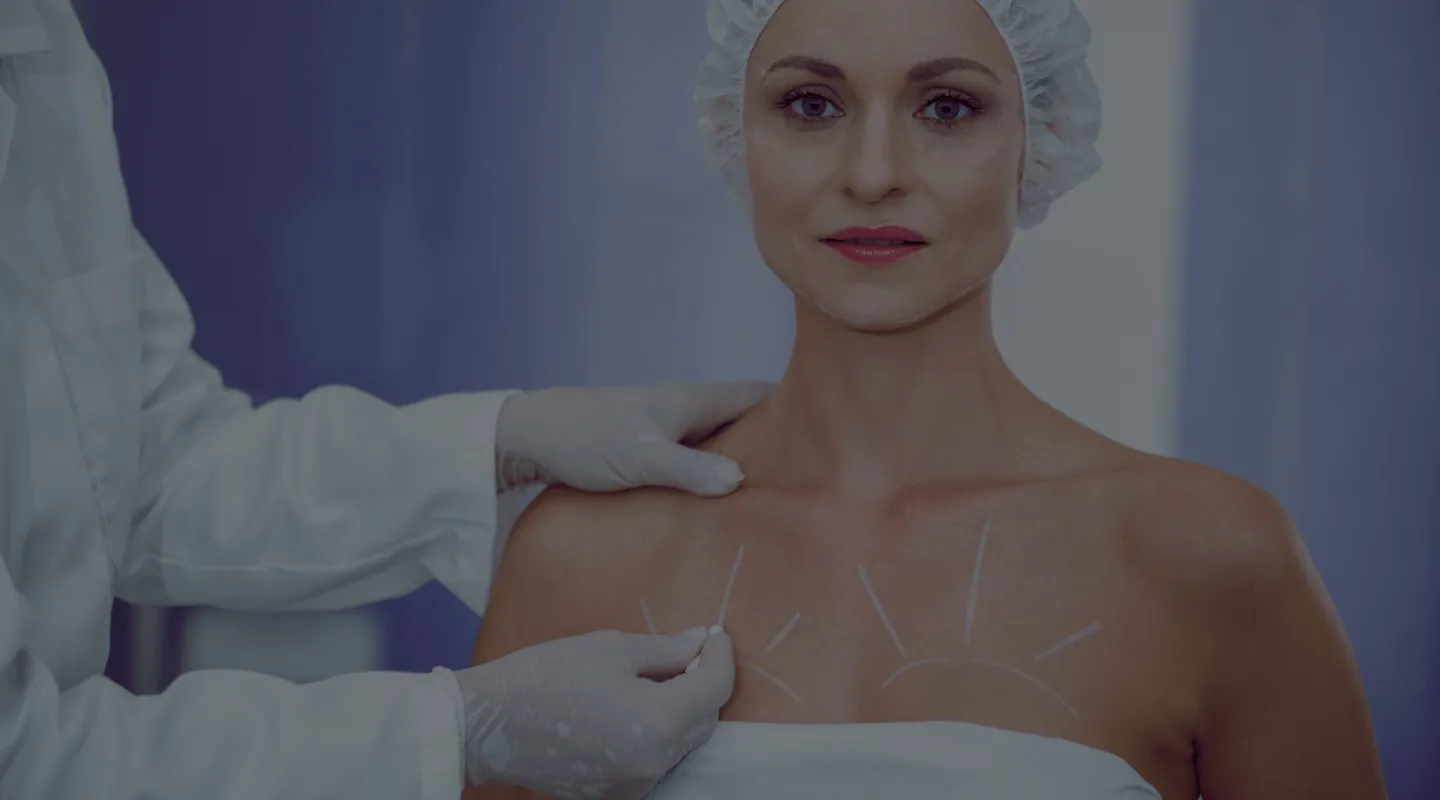
Breast lift
Your breast lift in Tunisia at an affordable price
After pregnancy, weight loss, or simply with age, a breast lift restores shape and firmness to your breasts.


How does it work?


What is a breast lift?
If your goal isn’t to increase the size of your breasts but simply to lift them, then a breast lift, or mastopexy, is the ideal procedure for you. Over the years, your décolletage can lose its firmness, and you may no longer feel in harmony with your body. Breast sagging can be caused by age, significant weight loss, or pregnancy.
The breast is an essential element of a woman’s femininity and sensuality. It also holds great symbolic value, linked to the image of fertility and the function of breastfeeding. Various factors can influence its shape. The simple passage of time makes breasts more supple and relaxed. Significant weight changes resulting from poor diet, pregnancy, and/or breastfeeding cause the skin to sag. Breast augmentation isn’t the only solution for restoring harmony to your figure!
Breast lift for a shapely bust
Sagging breast tissue is not abnormal. However, some people wish to correct this minor imperfection. Today, this is possible thanks to mastopexy (breast lift or breastplasty). First, it is important for the surgeon to assess the patient, as this operation is not recommended for everyone. Ptosis, meaning the sagging of the breast tissue, can be classified into three degrees: mild, moderate, and severe. Depending on the severity, the surgeon decides whether or not to proceed.
The operation involves three incisions:
- an incision following the perimeter of the areola, to improve the position of the nipple;
- an incision extending vertically from the lower edge of the areola to the inframammary fold;
- an incision along the inframammary fold, to lift the breast;
Once these phases are complete, the operation concludes with suturing using stitches placed both internally and externally. Depending on the case, the anesthesia may be general (but without intubation) or local with sedation. If the patient also wishes to increase or decrease the size of her breasts, this can be combined with breast augmentation or breast reduction surgery.
How much does a breast lift cost in Tunisia?
A breast lift includes all medical costs related to the procedure:
- plastic surgeon,
- anesthesiologist,
- operating room,
- hospitalization,
- nursing staff,
- dressings, post-operative care and assessments.
Who is a breast lift suitable for?
A breast lift is primarily for women who wish to correct breast ptosis, or sagging breasts. This type of cosmetic surgery is often sought by those who have undergone significant changes in their bodies. Generally, pregnancies, breastfeeding, weight fluctuations, or simply natural aging lead to a loss of firmness and volume in the breasts. A breast lift is suitable for women who want to regain a more youthful, firmer, and more shapely bust. Candidates must also be in good general health and have realistic expectations.
What precautions should be taken before a breast lift in Tunisia?
Before undergoing a mastopexy, or breast lift, it’s important to take certain precautions. First, it’s crucial to consult a qualified and experienced plastic surgeon to assess your specific situation. If you have breast ptosis (sagging), a mastopexy may be an option to lift and firm your breasts. However, it’s essential to understand that cosmetic surgery is generally not covered by health insurance. Therefore, be wary of offers to perform breast augmentation for free. Make sure you choose a competent and reputable professional to avoid complications or unsatisfactory results.
Before the procedure, the surgeon will discuss your expectations with you. They will also provide detailed information about the procedure, including risks and precautions. You may need to undergo pre-operative medical examinations to assess your overall health and suitability for surgery. Finally, you should stop smoking and avoid certain medications that could increase the risk of complications. By following these precautions, you can best prepare for your breast lift and maximize the chances of satisfactory results.
Breast lift techniques in Tunisia
Circumareolar Mastopexy
The surgeon prefers this incision technique because it allows for greater control over the developing scar. The surgeon makes an incision around the colored edge of the areola, providing access to the breast tissue. Although many surgeons use this technique, there are risks associated with flattening the breast mound and wrinkling of the skin around the areola. Furthermore, with this technique, the surgeon can only move the nipple/areola complex up to two centimeters.
With patience and meticulous work, the surgeon can achieve a near-perfect result, including:
- No visible scarring;
- No wrinkling of the skin around the areola;
- Maintaining the roundness of the areola;
- Controlling the shape of the breast mound;
- The ability to move the nipple/areola complex up to eight centimeters;
Inverted-T Mastopexy
The surgeon uses this incision technique for women with very heavy breast tissue and grade 4 ptosis. This technique is most effective for women who have lost a significant amount of weight, have post-pregnancy/breastfeeding breasts, and poor skin elasticity. The surgeon makes an incision around the areola, in the lower part of the breast tissue, and along the natural curve of the inframammary fold. When closing the incision, the surgeon places five layers of sutures. These layers control any tension placed at the base of the wound and prevent the incisions from stretching, which can lead to more extensive scarring. The surgeon reserves the inverted-T incision for women with larger breasts because it results in more visible scarring. The surgeon takes great care to control the scar, ensuring it is as fine as possible.
Internal Mastopexy
For women with large, enlarged breasts who require additional support but absolutely refuse an inverted T scar, the surgeon performs an internal mastopexy. This technique combines a circumareolar incision in the skin with the inverted T-shaping of the breast tissue beneath the skin. Internal mastopexy is a revolutionary technique that provides long-lasting breast support without inverted T incisions in the skin.
How is a breast lift operation performed?
A breast lift can rejuvenate and lift sagging or drooping breasts. This procedure is often chosen by women who want to regain a firmer, more toned bust. Generally, the procedure begins with a thorough pre-operative consultation with a qualified plastic surgeon. During this consultation, you will discuss your aesthetic goals, your medical history, and the surgical plan tailored to your specific case. The operation requires general anesthesia to ensure your comfort and safety. The surgeon makes incisions using the technique chosen based on the amount of skin to be removed. They then remove the excess skin and reshape the breast tissue to achieve a firmer, more youthful appearance. If necessary, breast implants can be placed to increase breast volume.
Once the operation is complete, the doctor will apply dressings, and you will need to wear a compression bra to support your breasts during the healing process. Follow the surgeon’s post-operative instructions. Specifically, take the prescribed medications and attend regular follow-up appointments to ensure proper healing. Over time, the results of the breast lift will become apparent, and you can enjoy a more youthful and aesthetically pleasing bust.
Breast lift: what is the post-operative care?
After breast lift surgery, proper post-operative care is essential. Hospital stays for breast surgery are usually short, often ranging from a few hours to a day. After the procedure, it is common to experience some discomfort, bruising, and swelling in the breasts. The plastic surgeon will recommend wearing a special compression bra to support the breasts during the healing phase. This specialized bra provides additional support and helps reduce swelling. Adhere to the instructions for wearing the bra. In addition, avoid strenuous physical activity, sudden movements, or anything that might put excessive pressure on the breasts during the initial recovery period.
The surgeon will prescribe medication to relieve pain and prevent infection. Follow-up visits are crucial to monitor healing, remove sutures if necessary, and adjust the recovery plan based on each patient’s progress. By adhering to the recommended post-operative care and following the surgeon’s instructions, patients can minimize potential complications and optimize the aesthetic results of their facelift.
What is the recovery time after a breast lift?
The recovery time after a breast lift varies depending on several factors. Generally, the initial recovery period is about one to two weeks. During this time, strenuous physical activity should be avoided. Patients can usually resume their normal daily activities after this period. However, it is advisable to avoid vigorous exercise and sudden movements for about six weeks to allow for complete healing. Feelings of pain, swelling, and tenderness may persist for a few weeks, but these will gradually subside. Follow your surgeon’s postoperative instructions to optimize recovery and ensure satisfactory results.

Do you need a specialist's opinion?
What are the advantages and disadvantages of breast lift surgery in Tunisia?
A breast lift is a very popular type of surgery, but it is still a surgical procedure, and it’s important to have it thoroughly evaluated beforehand. The result will be satisfactory for those who complain of empty, sagging breasts or downward-pointing nipples. For everything to go smoothly, it’s crucial that the surgeon accurately assesses the degree of ptosis (sagging). It’s also good to know that in the postoperative period, there will be drainage and a dressing, which will be removed after a few days, and the stitches will be closed approximately one week later. Naturally, as this is a delicate phase, swelling may occur in the first few days, and some pain is to be expected, but it can be easily alleviated with pain medication.
The breasts will be held tightly by an elastic bra, and the following are prohibited:
- any kind of strain on the pectoral muscles;
- sudden movements or lifting heavy objects with the arms;
- physical activity for at least ten days;
Before breast lift surgery in Tunisia
During the initial consultation, the surgeon analyzes the shape and size of the breasts, assesses any ptosis (sagging), and its relationship to the proportions of the torso and overall silhouette. Based on this assessment, the surgeon will then illustrate the results you can expect. Furthermore, they will suggest the most appropriate surgical procedure for your specific case. In cases of significant volume loss, the surgeon may suggest a breast lift with implants. In other cases, the goal of restoring breast proportion may involve reducing its volume, which is achieved through mastopexy (breast reduction).
La cicatrice sera-t-elle visible?
Oui, Il s’agit toujours d’une incision et d’une suture, il est donc impossible d’avoir une cicatrice invisible. La cicatrice lifting mammaire sera présente, d’abord plus évidente puis elle s’amincit progressivement. Mais afin d’améliorer son esthétique, il sera possible de procéder ultérieurement à une chirurgie en mosaïque ou à un peeling au laser. Enfin, il est juste de savoir que les effets de cette chirurgie sont durables mais pas éternels, le sein étant soumis à la fois à la force de gravité et au vieillissement, il est donc conseillé d’opérer après l’âge de 22 ans lorsque le développement est déjà bien avancé (en tenant toujours compte des autres ajustements possibles dans le futur). Le conseil est de se confier à un bon médecin et d’évaluer afin d’avoir un résultat optimal.
What are the contraindications to this type of surgery?
A breast lift is a relatively simple surgical procedure. When performed by a specialist, the results are generally very good. However, it is a genuine surgical procedure where complications (bleeding, infection) are rare but can only occur and be easily resolved if the procedure is performed by a plastic surgeon in a properly licensed facility. To reduce the risk of complications, it is important to carefully follow the advice and instructions given by the surgeon before and after the operation. Smokers should reduce their cigarette consumption, as smoking can increase the risk of complications and delay healing.
Our advantages

 Quality care
 Optimized costs
Reduced waiting times
Optimized costs
Reduced waiting times

 Assistance
 Personalized stay
 Tailor-made service
What is the success rate of a breast lift in Tunisia?
The success rate of breast lifts in Tunisia is generally very high, approaching 95%. This percentage reflects patient satisfaction with the results. The majority of women who undergo this procedure notice a significant improvement in the appearance of their breasts. Furthermore, they report an increase in their self-confidence. However, as with any surgical procedure, results can vary depending on several individual factors. Generally, these factors include skin elasticity, breast tissue quality, and adherence to post-operative recommendations. It is therefore essential to consult a qualified and experienced surgeon.
Breast lift before and after: Results
The results of your breast lift are immediately visible. Over time, post-surgical swelling will subside and incision lines will fade. Satisfaction with your new look should continue to grow as you recover from surgery. The final results of your breast lift will appear over the next few months as the shape and position of your breasts continue to stabilize. The incision lines are permanent but will continue to fade over time. Please note that the results of your breast lift surgery will be long-lasting. Over time, your breasts may continue to change due to aging and gravity.
You can maintain your new look longer if you:
- Maintain your weight;
- Maintain a healthy lifestyle;
- Follow your doctor’s instructions carefully. This is essential for the success of your surgery.
It is important that surgical incisions are not subjected to excessive force, swelling, abrasion, or movement during the healing period. Your doctor will give you specific instructions on how to care for them.
Contact and request for a quote for a breast lift in Tunisia
Our team is always available to assist and guide you through every step of your breast lift procedure in Tunisia. If you’re considering a breast lift in Tunisia, trust the advisors at Tunisia Destination Santé. Don’t hesitate to contact us for more information and to request a free, no-obligation quote.
Your health, our priority.
Request your free quote.
Frequently Asked Questions

Common signs that you might benefit from a mastopexy, or breast lift, include breast ptosis, or sagging breasts. This often manifests as breasts that have lost their firmness and elasticity, flattened breasts, and breast asymmetry. Breasts that are elongated or point downwards, enlarged areolas, and a loss of volume can also indicate the need for a mastopexy.
Correcting breast ptosis without surgery is limited. Solutions such as supportive bras, exercise to strengthen the pectoral muscles, and certain non-invasive treatments can offer temporary improvement. However, for an effective and lasting breast lift, surgery remains the most reliable solution.
Yes, it is possible to increase breast volume during a breast lift by combining the procedure with breast augmentation using implants. This combination not only lifts the breasts but also adds volume for more complete breast lift results.
Yes, breast ptosis correction can correct asymmetry. During the operation, the surgeon can reshape each breast so that they are symmetrical in size, shape, and position.
Breast ptosis can occur at any age, but it is more common after significant changes in the body such as pregnancies, significant weight fluctuations, or with the natural aging of the skin.
It is possible for breast ptosis to recur after a breast lift, especially if factors such as pregnancy, breastfeeding, or significant weight fluctuations occur after the procedure. However, modern techniques help minimize this risk.
Yes, a mastopexy can be repeated if necessary. However, each procedure must be evaluated individually to ensure the safety and effectiveness of the breast lift.
Having your period at the time of the procedure is not a problem, but it is advisable to inform your surgeon. This allows for additional precautions to be taken to manage any discomfort and specific needs.
There is no direct link between breast lift surgery and breast cancer. However, it is essential to follow breast cancer screening recommendations before any surgical procedure.
Yes, it is possible to get pregnant after a mastopexy. However, it is generally recommended to wait until after you have completed your pregnancies before undergoing this procedure to ensure lasting breast lift results.
A breast lift can affect the ability to breastfeed, especially if incisions are made around the areola. Discuss your breastfeeding plans with your surgeon so they can use techniques that preserve the milk ducts as much as possible.
Coverage by social security for a breast lift after pregnancy depends on the degree of breast ptosis and its impact on your health. In some cases, breast ptosis may be covered.
Scars from a mastopexy are inevitable, but their appearance usually fades over time. They are most visible in the first few months after the operation, then become less apparent over the following 6 to 12 months.
Breast lift scars reach their final appearance after about a year. Furthermore, proper post-operative care can help improve their appearance.
Breast lift scars should not be exposed to the sun for at least a year after the procedure. UV rays can darken the scars and prolong the healing process.
During a mastopexy, incisions may be made in the nipple area to reposition the areolas. Your surgeon will take care to minimize risks to the nerves and milk ducts.
You should wait about two weeks before resuming sexual activity to allow the incisions to heal properly and avoid any discomfort or complications.
After a breast lift, some women may experience temporary or permanent changes in nipple and breast sensitivity. These effects vary from person to person.
You will be able to resume driving approximately one to two weeks after surgery, provided you do not experience any pain or discomfort that could impair your ability to drive safely.
Physical activity should be limited, and heavy lifting should be avoided for at least two weeks after a mastopexy. Ask for help with household chores and childcare during this time to allow for optimal healing.

